
China’s rapid military expansion in Southeast Asia
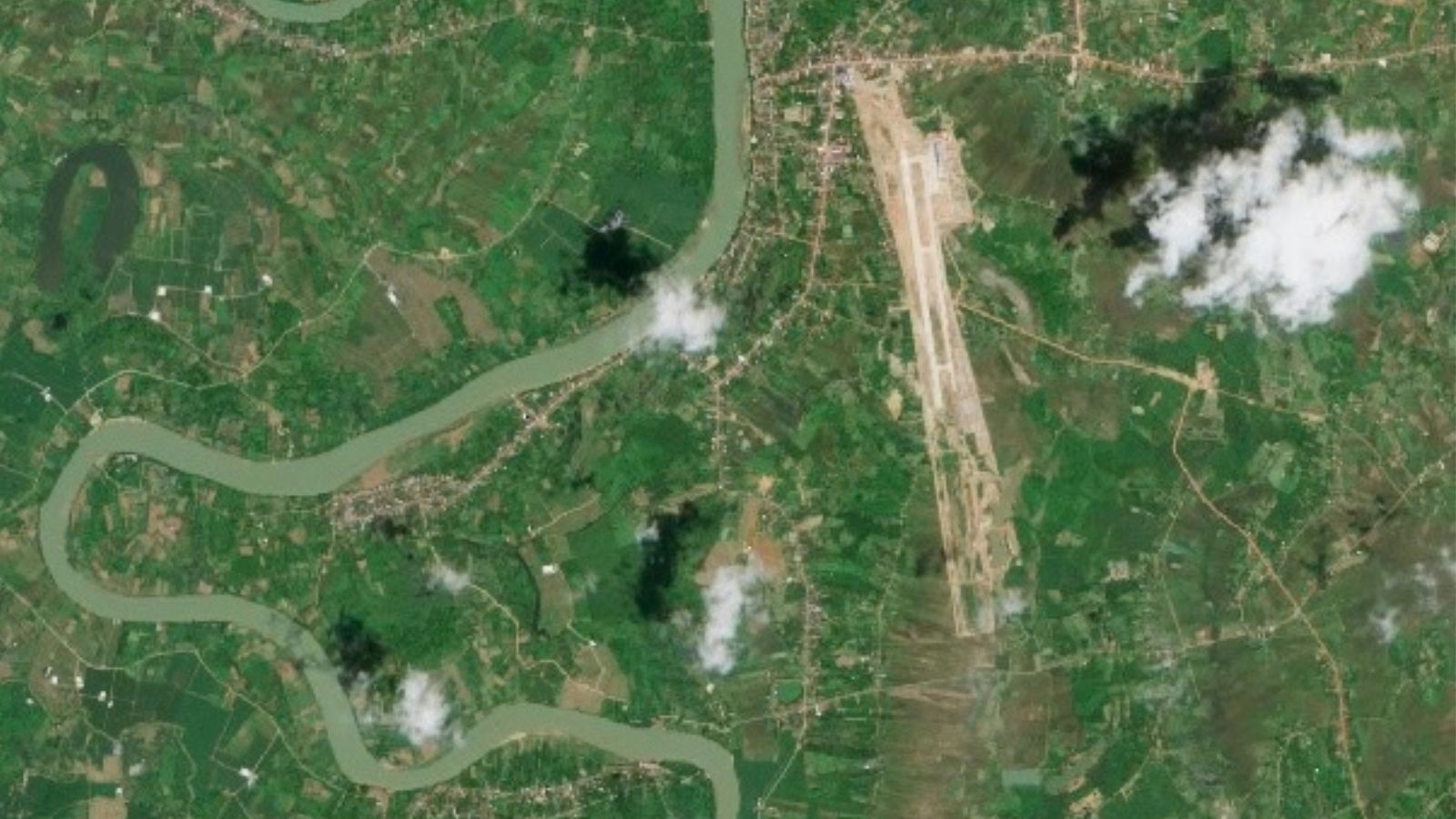
China opened a joint military support and training centre at Ban Keun airport in Laos on 29 September, its Ministry of National Defense announced. The site, about 50km north of the capital, Vientiane, also houses a new China-Laos Friendship Aviation Academy. Beijing says both are run jointly and exist to train Lao air force pilots. It is the second facility of its kind China has opened in mainland Southeast Asia, following a naval centre at Cambodia’s Ream base in April 2025.
The ministry gave no details of the personnel, aircraft or equipment at Ban Keun, Reuters reported. World Desk was unable to get a statement from the Lao government.
What Beijing says the centre is for
The ministry said the centre reflects “mutual respect and equal consultation”, complies with both countries’ laws and with international law, and does not target any third party, according to China’s state-run Global Times.
Song Zhongping, a Chinese military commentator quoted by the paper, set out the case in more detail. Laos, he said, has a small air force and no systematic way of training its pilots, maintenance crews and flight staff. The centre would let it train its own people instead of relying on courses abroad, and could host joint search and rescue, border control and disaster relief drills. Song said the Laos and Cambodia centres “belong entirely” to their hosts, with no independent Chinese garrison and no exclusive Chinese use.
The training argument rests on a real gap. According to Reuters, Lao personnel have historically had to travel to Vietnam, Russia or China for advanced military training.
What the imagery and analysts show
Satellite imagery shows the work took barely a year.
Rachel Vandenbrink, a senior analyst at the Australian Strategic Policy Institute, told Reuters that the “joint support” label suggests the People’s Liberation Army (PLA) “could be seeking persistent access to a logistics hub that can support forces rotating through Laos”. Collin Koh, a security scholar at the S. Rajaratnam School of International Studies in Singapore, went further. He told Reuters that observers “may not be wrong to conclude” Ban Keun is “the first full-fledged PLA overseas base in Southeast Asia”, and compared it more closely with China’s base in Djibouti than with Ream.
Beijing’s account and the analysts’ readings are not mutually exclusive. An airfield can train Lao pilots and also give Chinese forces somewhere to operate from. What the public record does not show is how many Chinese personnel are at Ban Keun, which aircraft use it, and on what terms.
Ream as a precedent
China and Cambodia opened their Joint Support and Training Center at Ream on 5 April 2025. Beijing described it in almost the same words it now uses for Laos. Phnom Penh said the base was open to friendly navies, and within weeks it had received two Japanese minesweepers and a Vietnamese patrol ship, according to the Asia Maritime Transparency Initiative (AMTI) at the Center for Strategic and International Studies.
The same AMTI study found that two Chinese Type 056A corvettes had been stationed at Ream continuously since December 2023, rotating crews and hulls, and that China kept exclusive access to the base’s largest pier. Visiting foreign ships used a separate wharf. Cambodia has denied that Chinese troops are stationed there, Reuters reported.
Song drew the line between the two sites himself: Ream serves the Gulf of Thailand, Ban Keun the inland airspace of the Indochina peninsula. He also compared the Laos centre to Djibouti, which the PLA opened on 1 August 2017. Beijing calls that facility a logistics base, and it is widely regarded as China’s first overseas military base. The comparison Song offered as reassurance is the same one Koh uses to explain his concern.
The regional view
Thailand shares long borders with both Laos and Cambodia. Its Defence Ministry spokesman, Rear Admiral Surasant Kongsiri, told Reuters that Thailand respected Laos’ sovereignty and would “continue to closely monitor developments”.
Bangkok’s caution has a recent backdrop. Thailand and Cambodia fought along their border in July 2025, and fighting resumed in December, when Cambodia accused Thai F-16s of bombing its territory. Al Jazeera reported that the Cambodian and Thai governments put the combined number of displaced people at nearly one million. When a Chinese-supplied corvette arrived at Ream in April this year, the Global Times acknowledged that Thailand was watching maritime developments closely.
Vietnam, which borders Laos and has trained Lao officers in the past, had made no public comment by 30 September.
Laos’ own room to bargain is limited. The Lowy Institute estimated in April 2025 that China holds about $5.1bn of Laos’ external government debt, nearly half of the total, and that total public and publicly guaranteed debt reached about $17bn, or 112% of GDP. The relationship is also close at the top: Reuters noted that Lao President Thongloun Sisoulith met Xi Jinping in Beijing in June, and that the two militaries held a joint humanitarian exercise this month.
The global picture
According to Reuters, the Pentagon’s 2025 annual report to Congress on the Chinese military listed 22 countries where Beijing had plans for military facilities. Laos was not among them.
A pattern is visible across the three sites. Djibouti sits at the southern entrance to the Red Sea, on the route to the Suez Canal. Ream sits on the Gulf of Thailand. Ban Keun puts a Chinese-supported airfield inland, about 50km north of a capital that lies on the Mekong border with Thailand. In each case Beijing has presented the site as cooperation that serves the host and threatens no one, and in each case outside analysts have read it as a step towards a wider logistics network.
