
Houthis Put a Price on Saudi Arabia’s Only Way Out
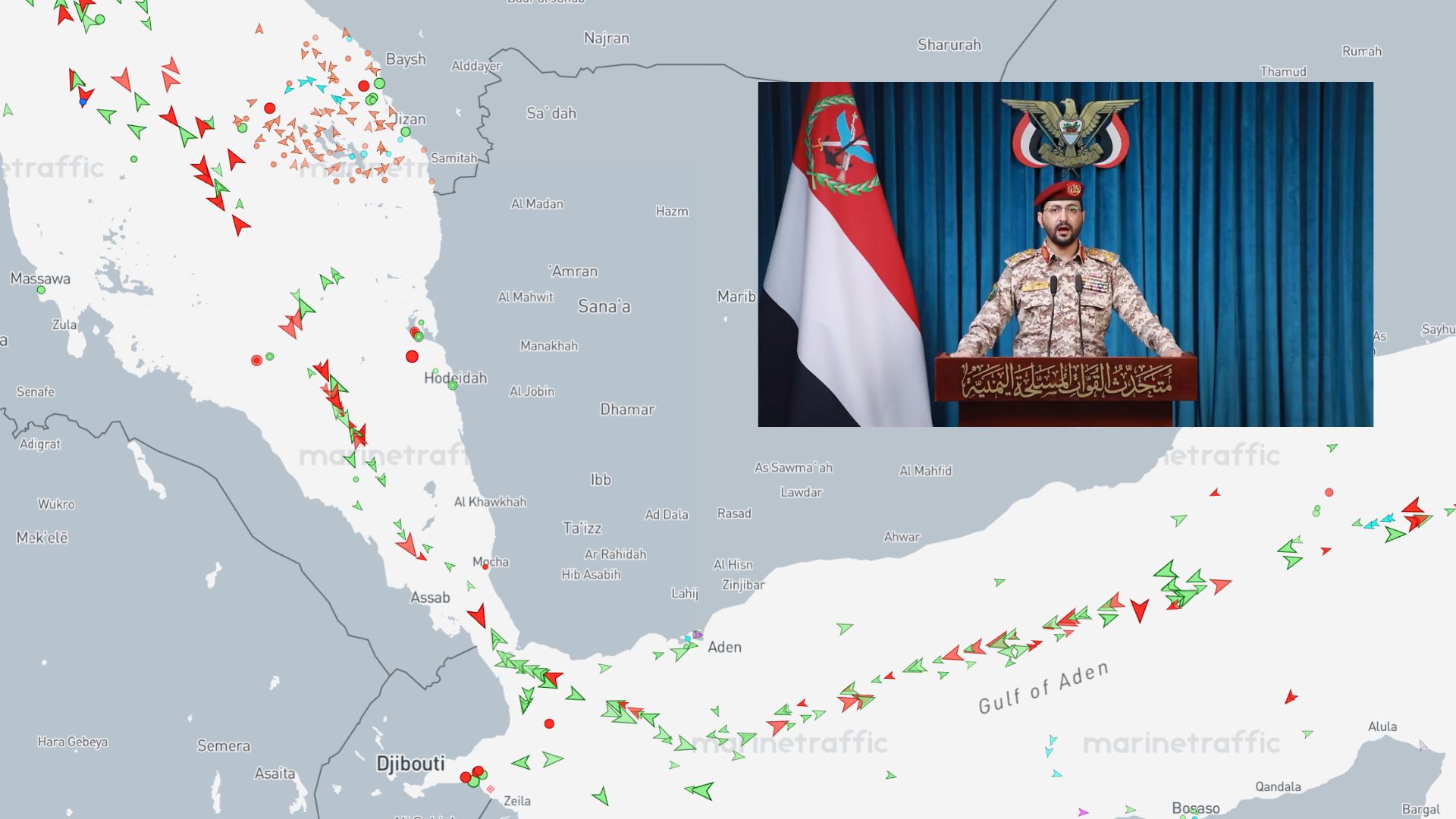
The distress call came over VHF radio. The tanker Encelia, struck by a missile, was on fire in the Red Sea; Saudi Arabia’s Transport General Authority confirmed the hit and said all crew were safe. Houthi military spokesman Yahya Saree claimed it and a second vessel: “We targeted two Saudi oil tankers, named Encelia and Layla, for their violation of the blockade decision issued by the armed forces,” carried out “using a number of ballistic and cruise missiles, as well as drones.” As a Trading Economics market note put it, these were “the first direct strikes on tankers in the waterway,” opening a new front “as risks to shipping through both the Red Sea and Strait of Hormuz mounted.”
The Reroute Was the Story. Now the Reroute Is the Target
Despite the Iran war, the oil market has run on a single reassuring fact: Saudi Arabia had a way around. With the Strait of Hormuz effectively closed since late February, the kingdom diverted the bulk of its exports across the peninsula to the Red Sea port of Yanbu, and that bypass is a large part of why crude never reached the crisis highs of past supply shocks.
The Houthis have now put a missile through the release valve. Their maritime embargo on Saudi shipping, declared on July 20, and Wednesday’s strikes convert the fallback route into a second contested one. This is why the market response was so significant. When Hormuz alone was disrupted, the Red Sea capped the risk premium. With both of the world’s two critical oil corridors under simultaneous threat, there is no third route to anchor expectations — and Bab al-Mandeb, just 29 kilometres wide at its narrowest, is far easier to hold at risk than to defend.
What Actually Moved, and How Far It Could Go
The price action was immediate. Brent, the benchmark for more than two-thirds of global oil, climbed nearly 4.12 percent to a six-week high of $94.76 a barrel; West Texas Intermediate rose 4.35 percent to $88.01. The physical market moved too. Five tankers loaded with Saudi crude turned round in the Red Sea on Tuesday — four bound for China and India rerouting toward the Suez Canal, a fifth reversing in the Gulf of Aden — and the Houthis said Wednesday’s operation forced “nearly ten ships” to abandon their routes.
The scale of what is exposed is large. Bab al-Mandeb carried about 4.1 billion barrels of crude and refined products in 2024, roughly 5 percent of the global total; Shutting it while Hormuz stays closed could block a quarter of the world’s oil and gas supply. Soojin Kim, a Dubai-based analyst at MUFG, attributed the rally to “continued US strikes on Iran, President Trump’s renewed threats of broader military action and Houthi [threats of] attacks on shipping in the Red Sea, alongside recent tanker attacks near the Strait of Hormuz.” Goldman Sachs warned Brent could rally beyond $120 a barrel in the fourth quarter if the disruption persists.
The Case for Skepticism — and Why It Is Thinner This Time
There is a serious argument that the market is overreacting. The Houthis fired on Red Sea shipping for nearly two years from late 2023, and global oil kept flowing; the campaign wound down only with the Gaza ceasefire in October 2025. Interdiction proved harder to sustain than to announce, a US-led naval coalition shot down hundreds of drones and missiles, and a May 2025 deal brokered by Oman eventually quieted the waterway. Skeptics can reasonably note that a distress call and a bow fire are not a closed strait.
But the 2023–25 precedent cuts the other way on the fact that matters most. When the Houthis first attacked Red Sea shipping, Gulf oil was flowing freely through Hormuz, so threatened cargoes had somewhere else to go. This time they do not: Saudi crude is being loaded into the Red Sea precisely because Hormuz is shut. A rerouted barrel that has already crossed the peninsula by pipeline cannot be rerouted again. And the earlier campaign mostly spared tankers and Saudi-flagged vessels; Wednesday crossed both lines at once. Hussain al-Bukhaiti, a Sanaa-based journalist, told Al Jazeera that critics who doubt the blockade “should remember how successfully the Houthis closed access to the Red Sea for the Israeli ports,” forcing the closure of Eilat — a reminder that the group has shut a national trade route before.
Goldman’s base case still assumes de-escalation and Brent back near $80 by year-end, and that may well hold; Saudi Arabia has rejected the embargo and can route some volumes through Suez at added cost and delay. But the bank concedes its risks are “tilted to the upside,” and the reason is structural rather than sentimental. A market that priced Hormuz on the belief that the Red Sea would absorb the overflow now has to price the possibility that neither corridor is safe.
