
Does CIA Director John Ratcliffe’s arrival in Moscow signal movement on Ukraine peace talks?
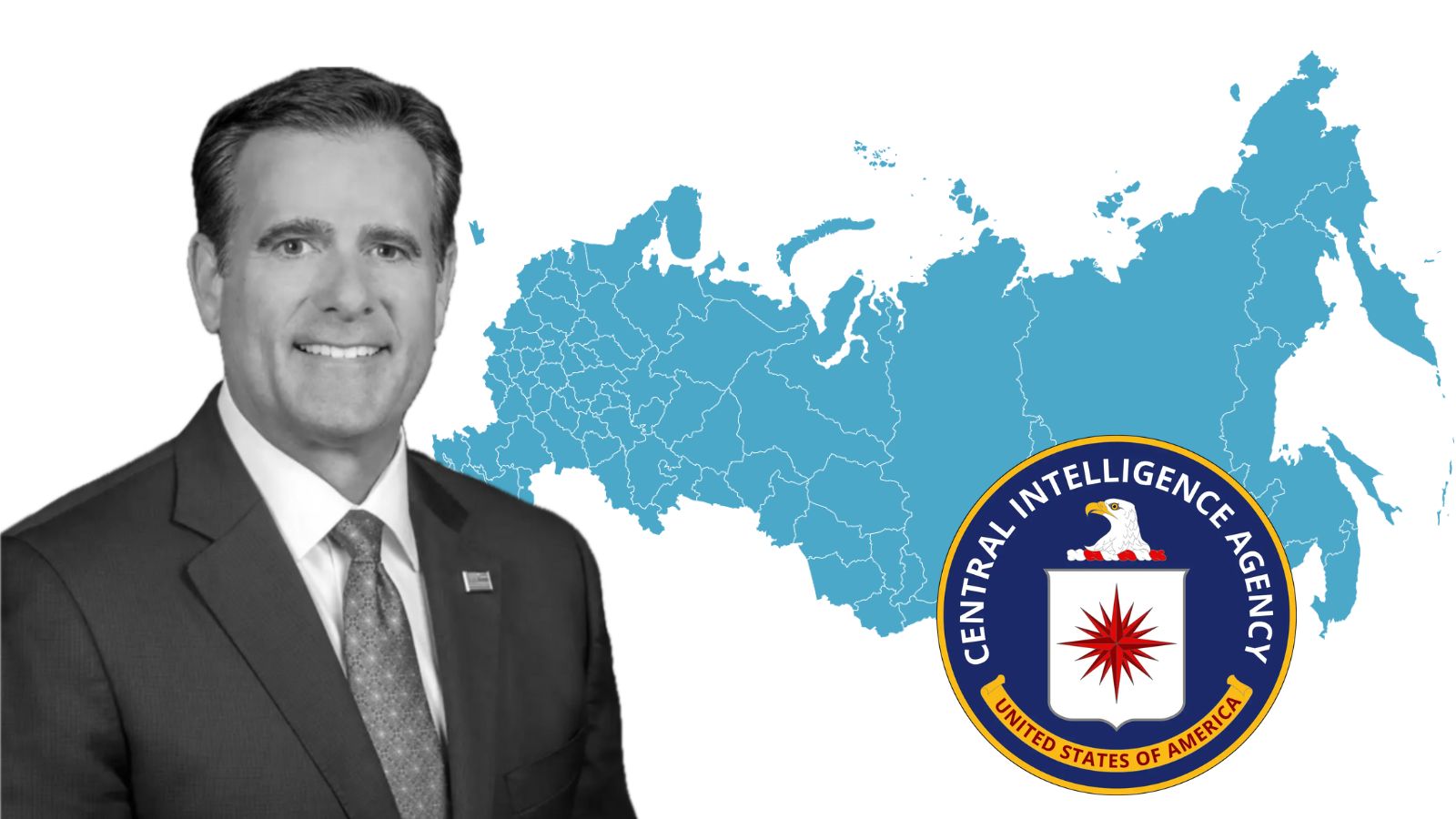
CIA Director John Ratcliffe is in Moscow for meetings, CBS News reported on Tuesday, citing sources familiar with the situation. CBS, which broke the story, said it appeared to be Ratcliffe’s first known trip to Russia as director. The CIA did not immediately comment, and neither the American nor the Russian government has confirmed the identity of the official or the purpose of the visit. World Desk has not independently verified the report.
The account followed a morning of unexplained movements. A US Air Force C-17A Globemaster III transport aircraft landed at Moscow’s Vnukovo airport at around 07:00 GMT, having flown directly from Riga, Reuters reported, citing Flightradar24 data; Reuters could not verify whether it carried cargo or passengers. Footage then circulated appearing to show a convoy with US diplomatic plates moving through the city under police escort. Latvia’s Ministry of Defence told Newsweek the flight had been “properly coordinated and authorized” within Latvian airspace.
The Kremlin’s account sits awkwardly alongside all of this. Spokesman Dmitry Peskov told reporters he had no information about the aircraft and that no meetings with representatives of the US administration were scheduled in Moscow this week. Both statements can be true of a visit conducted between intelligence services rather than through diplomatic channels, but neither has been reconciled on the record.
What a spy chief’s visit signals
Ratcliffe’s Russia portfolio is not the peace negotiation. It is the intelligence channel and the detainee file. He opened a line to Sergei Naryshkin, head of Russia’s Foreign Intelligence Service, in a phone call in March 2025 — the first such contact in more than two years — in which the two agreed to maintain regular communication. He personally negotiated the April 2025 exchange that freed the US-Russian dual national Ksenia Karelina, and the agency was involved in the 2024 swap that returned the Wall Street Journal reporter Evan Gershkovich and the Marine veteran Paul Whelan, CBS reported.
That file is active. Russia released Robert Gilman, a former Marine held for more than four years, on 11 August. The following day 16 US senators pressed the administration to secure the release of five Americans still held. There is a precedent in the aircraft itself: the newspaper Kommersant recalled a US military flight from Andrews to Vnukovo in February 2025 that carried Alexander Vinnik home to Russia as part of the exchange freeing the American teacher Marc Fogel.
The precedent that will be reached for is a different one. In November 2021 the then CIA director, William Burns, went to Moscow and warned Putin directly against invading Ukraine. That trip is remembered because it failed. It is worth noting what it was: a channel used to deliver a message the president wanted delivered privately, not a negotiation.
The distinction matters for understanding what happened on Tuesday. Trump’s Ukraine settlement is run by Steve Witkoff and Jared Kushner, and they are not in Moscow. Their long-trailed first visit to Kyiv, floated for Ukraine’s Independence Day, was postponed over intensified Russian strikes, Ukrainska Pravda reported, citing Radio Free Europe/Radio Liberty; a source told the Russian agency TASS that a Moscow trip was unlikely this month. A spy chief travelling where the envoys are not is a channel operating in parallel to the negotiation. It is not evidence that the negotiation has moved.
What has happened
Trump campaigned on ending the war fast. What happened was very different. The Council on Foreign Relations’ Global Conflict Tracker, updated on 2 August 2026, sets out the sequence. In March 2025 Trump paused US assistance to press President Volodymyr Zelenskyy into negotiations. In May 2025 Russian and Ukrainian delegations met directly for the first time since 2022, producing the war’s largest prisoner exchange but no truce. Trump and Putin met in Alaska that August; no agreement was announced.
The most substantial attempt came that November, when Washington put forward a 28-point draft developed with Moscow. According to a House of Commons Library briefing of 19 March 2026, it would have capped Ukraine’s armed forces, required a constitutional commitment not to join the North Atlantic Treaty Organisation (NATO), recognised Russian sovereignty over Crimea, Donetsk and Luhansk, lifted sanctions and returned Russia to the Group of Eight. Ukraine rejected it and worked with Washington on a revised 20-point plan. After talks with Trump at the end of December, Zelenskyy said 90 per cent of a deal was agreed.
Trilateral rounds in Abu Dhabi and Geneva in early 2026 produced no breakthrough, and talks set for March were postponed because of the conflict involving the United States, Israel and Iran. In February the United States set a June deadline, which Zelenskyy said was tied to the American electoral calendar. June passed without a deal. A three-day ceasefire agreed in May unravelled, each side blaming the other.
Why it is stuck
The obstacle is territory. Russia’s position is that Ukraine must give up the roughly 19 per cent of Donetsk province it still holds. Putin put it plainly after a Collective Security Treaty Organisation meeting on 27 November 2025: if Ukrainian troops leave the Donbas, fighting stops; “if they do not leave, we will achieve it militarily”. Moscow’s case is that a ceasefire ahead of a settlement would surrender its battlefield leverage while leaving the causes of the war untouched.
Ukraine’s position is that withdrawal from land it holds is unconstitutional and would furnish a launch point for a future offensive, and that any territorial change would require a referendum. Speaking on 23 August, Zelenskyy said Witkoff and Kushner “very much want to bring President Trump a victory” but were struggling to find a format Moscow would accept that did not begin with a Ukrainian withdrawal from the east, the state agency Ukrinform reported.
One American attempt to work around the deadlock is a proposed free economic zone in the Donbas run by a third party. On Tuesday the Kremlin questioned whether it could work, saying the territory is formally part of Russia and third-party management therefore unlikely, Reuters reported. That objection restates the territorial dispute rather than settling a detail of it.
The cost of the delay
The war is in its fifth year and the civilian toll is rising. On 24 August, Ukraine’s 35th Independence Day, more than 50 UN member states issued a joint statement urging Russia to accept a full, immediate and unconditional ceasefire. Danish Foreign Minister Lars Løkke Rasmussen, who delivered it, said: “Ukraine wants peace. We want peace.” The statement cited UN figures showing at least 437 civilians killed in Ukraine in July, the highest monthly toll since March 2022, and at least 68,000 killed or wounded since February 2022, including nearly 4,000 children.
Russia’s UN ambassador, Vasily Nebenzya, rejected that framing at the same session, accusing Ukraine of deliberately striking Russian civilians after failing to make gains on the battlefield. Ukrainian drone attacks have killed civilians inside Russia this month, including 13 in Nizhnekamsk on 10 August.
What would have to change
Nothing in the public record suggests either capital has altered its terms since November 2025, and no round of negotiations is scheduled. Ukraine’s demand for security guarantees ratified by legislatures, and Russia’s opposition to any Western military presence, remain unreconciled alongside the territorial question.
Zelenskyy has now put his own timeframe on it, and it is not a short one. In a weekend briefing reported by Reuters on Tuesday, he said Ukraine sees a window for U.S. mediation running from the G20 summit in the United States in December to the end of summer 2027, after which the 2028 US presidential campaign will absorb Washington’s attention. Kyiv has drafted a one-page document with American and European officials to put to Moscow. “It contains one of the ideas for a ceasefire,” Zelenskyy said.
That is the measure of the distance that has been travelled. The pledge was a war settled within 24 hours of inauguration. The working assumption in Kyiv is a window closing in the summer of 2027, and the American in Moscow on Tuesday appears to have been the one who handles prisoners, not peace.
